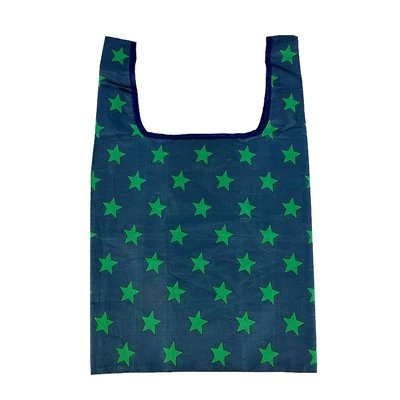

Screen Printing
Screen printing is one of the most common printing techniques. It uses a screen stencil to print the desired pattern onto the surface of an item. The advantages of this method are that it can handle large-scale production of simple colors, print designs of different sizes, and offers high color saturation, durability, and clear results.
On canvas bags, screen printing can achieve complex patterns and color effects, but it requires a dry environment, making it more suitable for mass production than DIY.
Heat Transfer Printing
Heat transfer printing comes in two types: heat transfer printing and cold-peel heat transfer printing. Both use thermal paper as the substrate and transfer the pattern to the surface of the item at high temperatures. The biggest advantage of heat transfer printing is that it can print designs with very high detail, and it requires very simple equipment, making it suitable for DIY and small-batch production.
However, heat transfer printing is less durable than screen printing; even slight friction can cause the pattern to peel off. Furthermore, when the pattern contains lighter colors, a white substrate is needed to ensure color clarity.
Digital Printing Digital printing uses inkjet printers to transfer designs onto the surface of objects. Unlike screen printing, which requires manual stencil preparation, it creates patterns digitally. This makes digital printing ideal for small-batch production, with DIY projects being the most common application.
The advantages of digital printing include reduced manual operation, the ability to print complex images and colors, and no limitations on pattern shape and size. However, its durability is not as good as screen printing, and color deviations may occur when the pattern contains lighter colors.